Categories
Calendars
Guides
Reviews
Archive
Gallery
Articles
Ask Our Gardening Expert
WEEKLY GARDEN CALENDAR, AUGUST WEEK 2
Susan Explains Green Manures
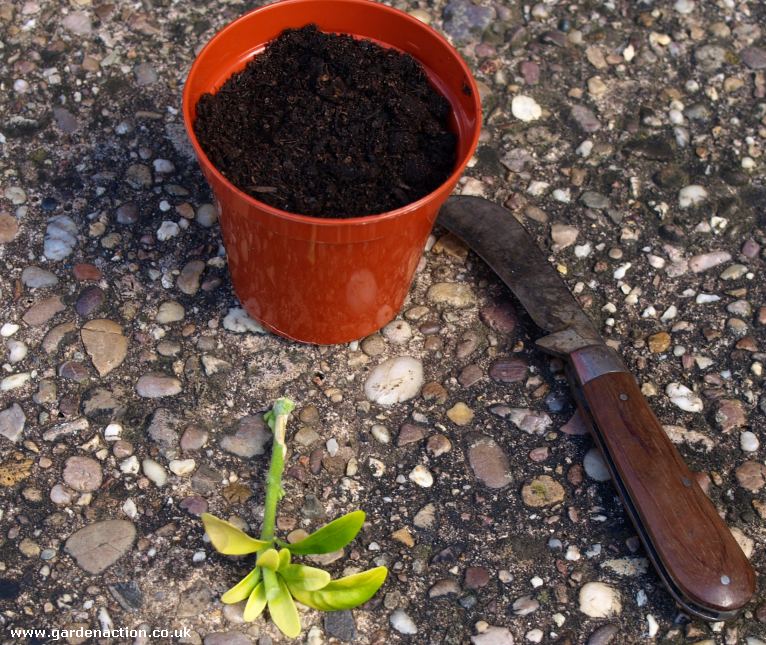
August is an ideal time to take semi-ripe cuttings of many deciduous shrubs. Among
those which do well are choisya, potentilla and lavender. Get a sharp knife and chop
off a 5 to 10cm shoot which has some older growth at the base and newer, soft growth
nearer the tip. Dip the base of the cutting in water then rooting compound, make a
hole in the compost and place the cutting in it.
Gently firm the compost down and place the cutting in a warm position which is
receives some light but not direct sunlight. Water the compost from the base by
putting it into a bowl of water. The cutting will stand the best chance if it is in
a propagator or a plastic bag. Remove the plastic bag as soon as the cuttings show
signs that they have rooted, this will normally be after about three weeks. The cuttings can be moved to their
final position mid spring the next year. Semi-ripe cuttings can be taken from the following plants:
Artemesia
Lobelia cardinalis
Agastache
Osteospermum
Aster
Penstemon
Arctotis
Rosemary
Diascia
Salvia
Fuchsia
Thyme
Gaura
Trycirtis
Heliathemum
Verbena
Lavender
Pelargonium
Learn more about semi-ripe cutting by
clicking here. Hedges The right shape is essential for a hedge. It should be wider at the base
than at the top. This will make it much less liable to wind and snow damage, and it just
looks better. Battery or mains powered hedge trimmers are the best tool for the job. The
mains powered ones especially, are one of the most dangerous of garden tools. The wounds
they can inflict are very serious so read the instructions provided by the manufacturers. If a hole has appeared in the hedge put a strong stake into the ground in
the middle of the hole. Tie surrounding stems and branches to the stake such that they are
pointing slightly downwards. stem which are growing downwards will be vigorous and put out
lots of shoots to cover up the hole in a short time.
Vegetables such as broad beans and peas have finished producing by now. So don't
just leave the soil to grow weeds in their empty space, grow a green manure instead.
It will stop those awful weeds growing and can be dug into the ground in March next
year. It will provide nutrients for the soil and prevent nutrients being washed away
over winter. Try clover or grazing rye for sowing now.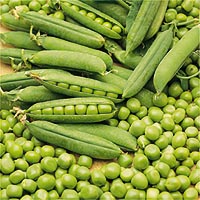
Semi-ripe Cuttings
Mid August is a good time to trim your hedge. Growth will have slowed, making this the last
cut of the year. At the same time the shoots will not yet have become woody, making them
easier to cut.